How Card Payments Work for Beauty Professionals
Last updated October 24, 2026 · By StyleSeat Editorial Team
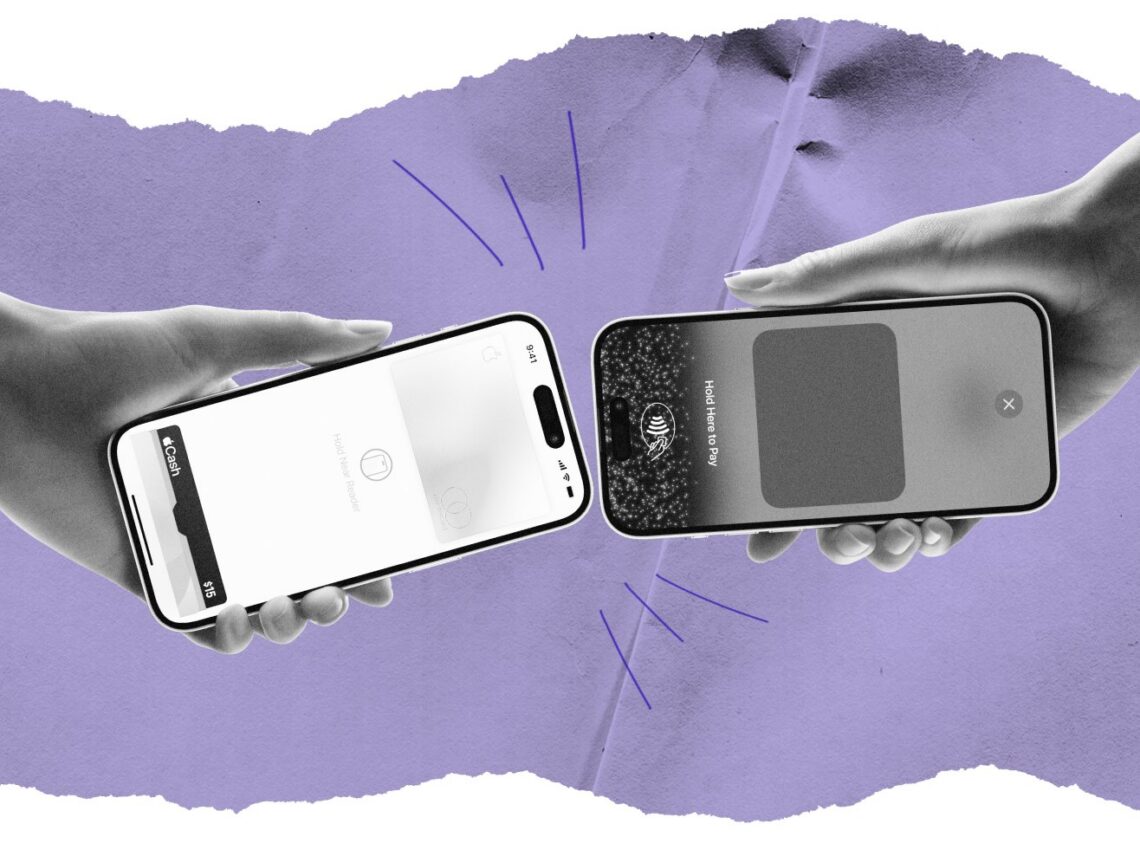
Wednesday, ten past two. Her card taps the reader and the screen says approved before she has put her phone away.
That approval is not money yet. It is a promise from her bank, waiting in a queue until tonight’s batch closes.
Weeks later a statement turns up to explain what happened to it, written in a language nobody taught you.
Here is how card payments work: a percentage and a flat charge, divided between three companies. Most of what you pay never reaches your booking app.
Short version
- Every card payment splits 3 ways: the bank that issued the card, the card network, and the processor.
- A rate is a percentage plus a flat fee. On StyleSeat that is 2.5% + 30¢ in person.
- Online costs a little more than in person, at 2.6% + 30¢, because the card is not physically there.
- New pros pay $0 for 21 days, then 1.9% + 30¢ for the first six months.
How card payments work, from the tap to your bank
The biggest slice is called interchange, and it goes to the bank that issued your client’s card. Not to your booking app. Not to the card machine company.
Interchange is set by the card networks, Visa and Mastercard among them. It moves with the card in her hand. A rewards card costs more to accept than a plain debit card, because somebody has to fund those airline miles.
The network then takes a smaller slice of its own, called assessments. Whatever is left after those two is the processor’s margin.
This is why no platform can wipe out card fees. Most of the cost is spent before the money reaches your account. Reading your appointment receipt line by line shows you where.
Flat-rate pricing, and why booking apps use it
A merchant account can price interchange-plus. You pay the real interchange on every card, plus an agreed margin on top.
It is honest pricing, and it is miserable to read. Your effective rate changes with the mix of cards that walked in that week.
Flat rate does the opposite. One published number covers every card type, and the processor absorbs the variance. You can quote your own cost on a $100 service without opening a statement.
A few booking apps publish no transaction fee of their own. Acuity Scheduling is one: you bring Stripe, Square or PayPal, and that company names your rate. Stripe publishes a standard 2.9% + 30¢. So the cost has not gone anywhere. It has moved to a second bill and a second login.
What card processing costs on StyleSeat
StyleSeat processes with Stripe, and the rates are published rather than quoted per account.
| When | The published rate | What it costs on a $100 service |
|---|---|---|
| During the 21-day free trial | $0 | $0 |
| First six months after the trial | 1.9% + 30¢ | $2.20 |
| In person after that — tap, reader, Tap to Pay | 2.5% + 30¢ | $2.80 |
| Online or card on file after that | 2.6% + 30¢ | $2.90 |
| Same-day payout, if you want one | 1.8% per transaction | $1.80 on top |
Same-day money is optional and it has rules. The payout runs once a day, before 3:00pm Pacific, between $50.50 and $1,000. Most pros leave it off and let the standard payout run. Getting paid out the same day weighs up that trade.
What that percentage actually buys
A rate is not rent on a card reader. It is a bundle, and most of it only shows up when something goes wrong.
- Fraud screening on every charge, before the money moves.
- Dispute handling when a client calls her bank 3 weeks later and says she does not recognise you.
- A card on file, so your cancellation terms are something more than a sentence on your page.
- Tap to Pay on your phone, with no terminal to buy, plus Apple Pay, Google Pay and Klarna.
- Payouts and records that reconcile, which is most of what your accountant charges you for.
Disputes are the line people underrate until the first one arrives. What to do when a client disputes a charge is worth reading before you need it.
The forty seconds at the front desk
Here is where this stops being accounting. Checkout is the last thing a client feels before she leaves.
She is holding her bag, looking at her fill, already thinking about parking. If checkout takes four minutes and two attempts, that is the bit she remembers.
You tap, she taps, the receipt goes to her phone. She is out the door still looking at her hands. Taking tap to pay at the chair buys back the awkward pause where nobody knows who speaks first.
That pause is worth money too. It is just harder to put on a statement than 2.5% is.
Taking payments on StyleSeat
Nothing is charged to process a card for the first 21 days. A 1.9% + 30¢ rate then runs for six months, before the standing rates in the table take over. Cash and check still work, and how StyleSeat Payments gets you paid covers the checkout flow itself.
StyleSeat’s standing price is $35 a month. There is currently a promotion at $19 a month, and promotional pricing moves, so confirm it before you budget.
Two kinds of professional end up paying that. One wants her chairs filled. The other is already full and wants more out of the hours she works now.
For the one still filling chairs, StyleSeat spends millions a year in ads to find your next client. Results are what you pay on: no new client, no fee. The charge lands once for each new client. It is 30% of her first visit, capped at $50, taken after the service.
Put a $100 first visit through it. The $30 charge and the $20 tip leave you $90 on the day, assuming a 20% tip. Every appointment she books after that one is yours, with nothing deducted. Think of it as another channel beside your own marketing, not a substitute for any of it.
For the professional who is already booked out, SmartPricing is the other half. Professionals who use it average $385 a year in extra service revenue, and the busiest tenth clear over $1,000. StyleSeat charges about 5.5% of each smart-priced appointment, capped at $16.50.
Questions professionals ask
What is interchange, in plain English?
It is the slice of every card payment that goes to the bank that issued your client’s card. It is the largest of the 3 pieces that make up your rate, and the card networks set it. No booking app can discount it, because no booking app receives it.
Why does an online payment cost more than one at the chair?
Because the card is not physically present, so the risk of a dispute is higher. On StyleSeat that difference is 1 tenth of a percent: 2.5% + 30¢ in person against 2.6% + 30¢ online.
What does StyleSeat charge to process a card?
2.5% + 30¢ in person and 2.6% + 30¢ online or on a saved card. New professionals pay $0 during the 21-day trial, then 1.9% + 30¢ for the first six months. On a $100 service the standing in-person rate works out at $2.80.
Do I pay card fees during the free trial?
No. Card processing is $0 for the 21 days of the trial. That also covers the new client fee, SmartPricing and the client booking fee for the same 21 days.
Can I get the money the same day?
Yes, for 1.8% of the transaction. It runs once a day, before 3:00pm Pacific, on amounts between $50.50 and $1,000. If you can wait for the standard payout, that 1.8% stays in your pocket.
Should I add a surcharge to cover card fees?
Check first. Surcharge rules vary by state and by card network, and some ban it outright. Building the cost into your menu is simpler: at 2.5% + 30¢, a $100 service carries $2.80.
None of this makes card fees fun. It does make them predictable, and predictable is the thing you can actually price around. Put the rate in your service prices once, and stop re-checking the deposit on a Monday morning. StyleSeat’s 21-day trial carries no card fees at all. See how the $19 promotional rate adds up on your own numbers.
StyleSeat is not affiliated with Stripe, Square, PayPal or Acuity Scheduling. This post is general information, not legal or tax advice.
Find a pro near you
Book the looks you are reading about — top-rated pros in your city.