Should You Hire Your First Employee? A Decision Guide for Solo Professionals

Last updated October 25, 2026 · By StyleSeat Editorial Team
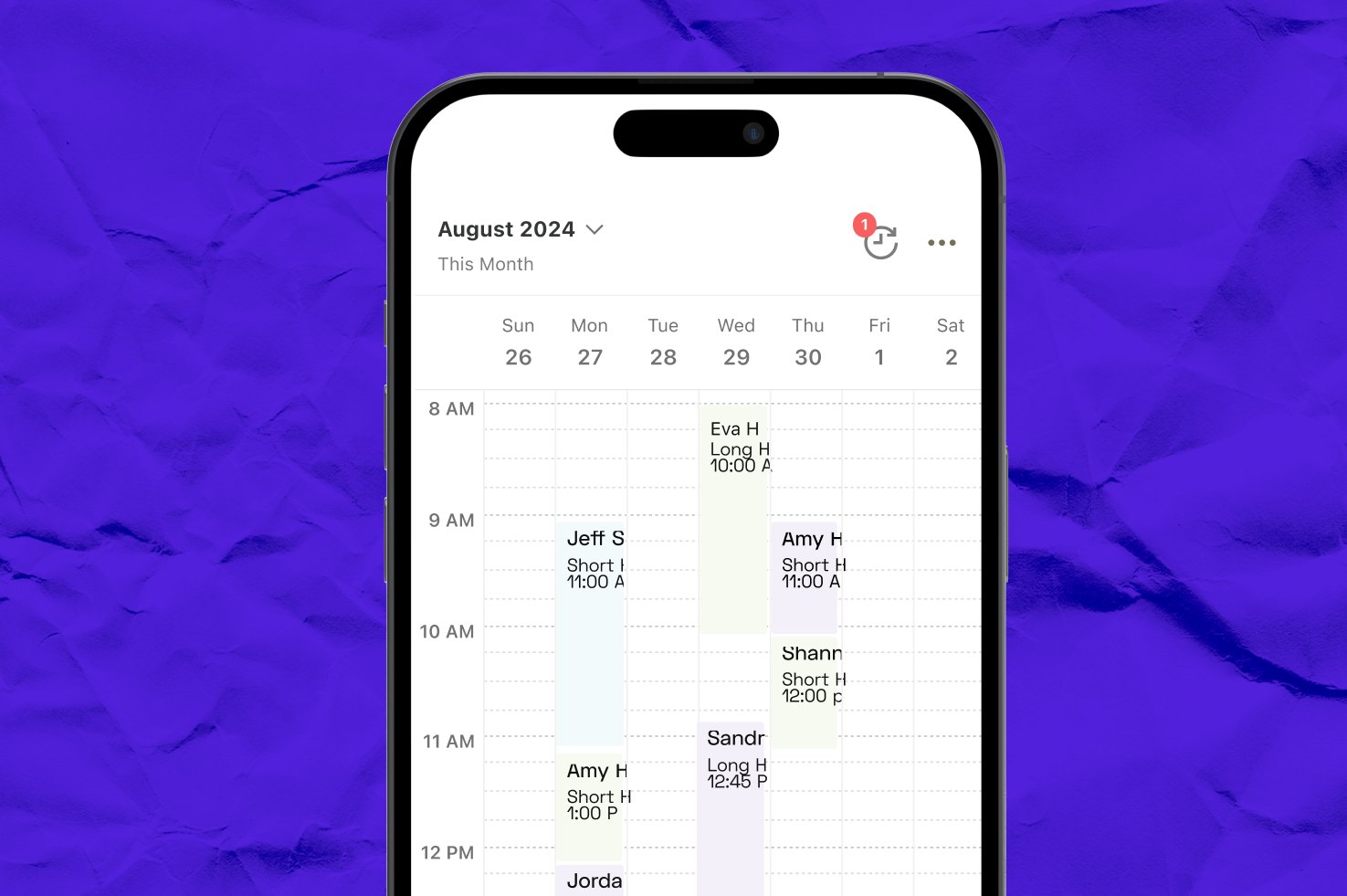
Your calendar shows three Saturdays booked solid, and a wait list that keeps growing. A client texts asking for a slot next week, and you have nothing open before next month.
You start doing the math between clients, on a torn receipt. One more set of hands could shorten that wait list and steady your income. But payroll is a real commitment, not a quick fix, and it deserves a clear head before you sign anything.
Short version
- A full calendar and a growing wait list are the clearest signs you need help, not more hours in your day.
- Employees, contractors, and booth renters carry different legal and tax duties, so match the arrangement to the role.
- Hiring costs more than a wage. Budget for payroll taxes, insurance, tools, and training time too.
- An accountant or employment attorney can confirm what your state requires before you make an offer.
Signs your book is telling you something
A packed calendar feels like success, until it starts costing you clients. Watch for these patterns over a few months, not one busy week.
You’re turning away new clients because you have no open slots for them. Your wait list keeps growing instead of shrinking. You’re working through lunch and skipping days off to keep up. Existing clients are rebooking further out than they’d like, and some are drifting to someone with sooner availability.
Any one of these on its own might just mean a busy season. Several together, for months in a row, usually mean your business has outgrown one pair of hands.
Employee, contractor, or booth renter? Know the difference
“Hiring help” can mean three very different arrangements, and each one comes with its own rules. Misclassifying someone can create real tax and legal exposure, so this is worth getting right from the start.
| Arrangement | Who sets the schedule | Who handles employment taxes | Typical fit |
|---|---|---|---|
| Booth or suite renter | The renter, running their own business | The renter, on their own income | An established pro who wants full independence |
| Independent contractor | Largely the contractor, by agreement | The contractor, on their own income | Specialized or project-based work, not ongoing daily control |
| W-2 employee | You, the business owner | You, through payroll withholding | An ongoing role where you set hours and methods |
The line between contractor and employee usually comes down to control. If you set the hours, dictate the process, and supply the tools, that role likely reads as employment. The paperwork doesn’t change that.
What hiring actually costs, beyond the paycheck
A wage is only the start. Bringing on a W-2 employee typically adds payroll taxes on top of the wage. Many states also require workers’ compensation insurance.
Then there’s the time cost: interviewing, onboarding, and training on your systems. Expect slower months while someone learns your clients and your standards. Some owners also budget for basic tools, product, and a station before a new hire earns a dime.
None of this means don’t hire. It means build the real number, not just the wage, before you decide what you can afford.
Where StyleSeat fits in
Before you hire, it helps to know your demand is real and steady. StyleSeat’s marketplace draws more than 74 million visits a year. Over 2 million clients are actively searching for a new pro at any time. That’s real, growing demand for a new hire’s open slots.
Once you bring someone on, shared systems matter. The $35-a-month subscription, now $19 during StyleSeat’s running promotion, bundles client reminders, marketing tools, and marketplace access. That means a new hire isn’t learning five separate systems on day one. Card payments process at 2.5% + $0.30 in person and 2.6% + $0.30 when a card isn’t present. That rate stays the same whether your team is one person or three.
If the real issue is pricing rather than capacity, look at SmartPricing first. Users average $385 more annually, and the busiest 10% clear over $1,000 more. That can sometimes close the gap a new hire was meant to close.
Hiring your first employee is one of the biggest calls you’ll make as a business owner. It should feel exciting, not just stressful. Get the classification right, and budget the full cost honestly. Bring in an accountant or attorney for anything specific to your state. Then build the systems that let your new hire succeed from week one.
FAQ
How do I know if I’m ready to hire my first employee?
Look for a pattern over several months: a growing wait list, turned-away clients, and no real days off. If that pattern holds, talk to an accountant about what you can sustainably afford to pay.
What’s the difference between hiring an employee and bringing on an independent contractor?
It largely comes down to control. An employee works under your schedule, methods, and tools, while a contractor typically runs their own process. Rules vary by state, so confirm classification with an employment attorney.
Do I need workers’ compensation insurance for one employee?
Many states require it once you have even one W-2 employee, though thresholds and rules differ. Check your state’s requirements or ask an insurance broker before your hire’s first day.
Should I talk to a professional before I hire?
Yes. An accountant can model the real cost of a hire, and an employment attorney can confirm classification and paperwork. Both are worth the fee before you make an offer, not after.
Find a pro near you
Book the looks you are reading about — top-rated pros in your city.