Pricing Strategies for Beauty Services That Actually Work
Last updated October 24, 2026 · By StyleSeat Editorial Team
You’re mixing a color correction on a Tuesday afternoon, three formulas deep. You already know this client is going to take twice as long as her slot allows. You’ll absorb the extra hour. You always do. Then you’ll wonder, again, why your calendar is full and your bank account doesn’t quite match it.
That gap is almost never a talent problem. It’s a pricing problem. Most beauty pros price the way they were taught, or the way the pro before them priced. They rarely test whether it fits their actual business.
Short version
- A full book at the wrong prices still leaves you underpaid. Being busy isn’t the same as being profitable.
- Tiered pricing by experience level, and demand-based pricing for peak hours, both outperform a flat one-size rate.
- Professionals using StyleSeat’s SmartPricing tool average $385 extra a year, and the busiest 10% clear over $1,000.
- Small, tested price changes beat one big scary increase. Adjust, watch the response, adjust again.
The skill behind the price
Before the strategy, a quick word about the work itself. A great colorist isn’t just following a formula off a chart. They’re reading undertone, porosity, and how the last three color jobs grew out. A skilled esthetician can tell what a client’s skin needs before the client says a word. That read comes from repetition, from thousands of appointments, from a kind of pattern recognition that no course fully teaches.
Pricing should reflect that judgment, not just the time on the clock. Two pros can perform the same service in the same time and still deserve very different rates. One of them has spent years sharpening an eye the other hasn’t built yet.
Pricing strategies that actually work
Flat pricing is simple, but simple isn’t always smart. Here are approaches that hold up better once your book starts filling.
| Strategy | How it works | Best for |
|---|---|---|
| Tiered pricing | Rates rise with experience level (junior, senior, master) | Multi-stylist salons and growing solo pros |
| Menu/package pricing | Bundles related services into one price | Encouraging upsells like add-on treatments |
| Peak/demand pricing | Higher rates for high-demand time slots | Fully booked pros with limited weekend availability |
| Value-based pricing | Price set by outcome and skill, not just time | Specialized services like color correction or lash extensions |
Peak pricing draws the most questions. It doesn’t mean punishing clients for wanting a Saturday slot. It means charging a little more when demand is highest. Use that room to offer better rates during slower hours. Both sides benefit. Your calendar fills more evenly, and busy-hour clients pay for the convenience they’re actually getting.
Where StyleSeat fits in
Getting the strategy right only matters if clients can find you and book at the new price without friction. StyleSeat’s marketplace brings in over 74 million visits a year. More than 2 million clients are actively searching for someone like you right now.
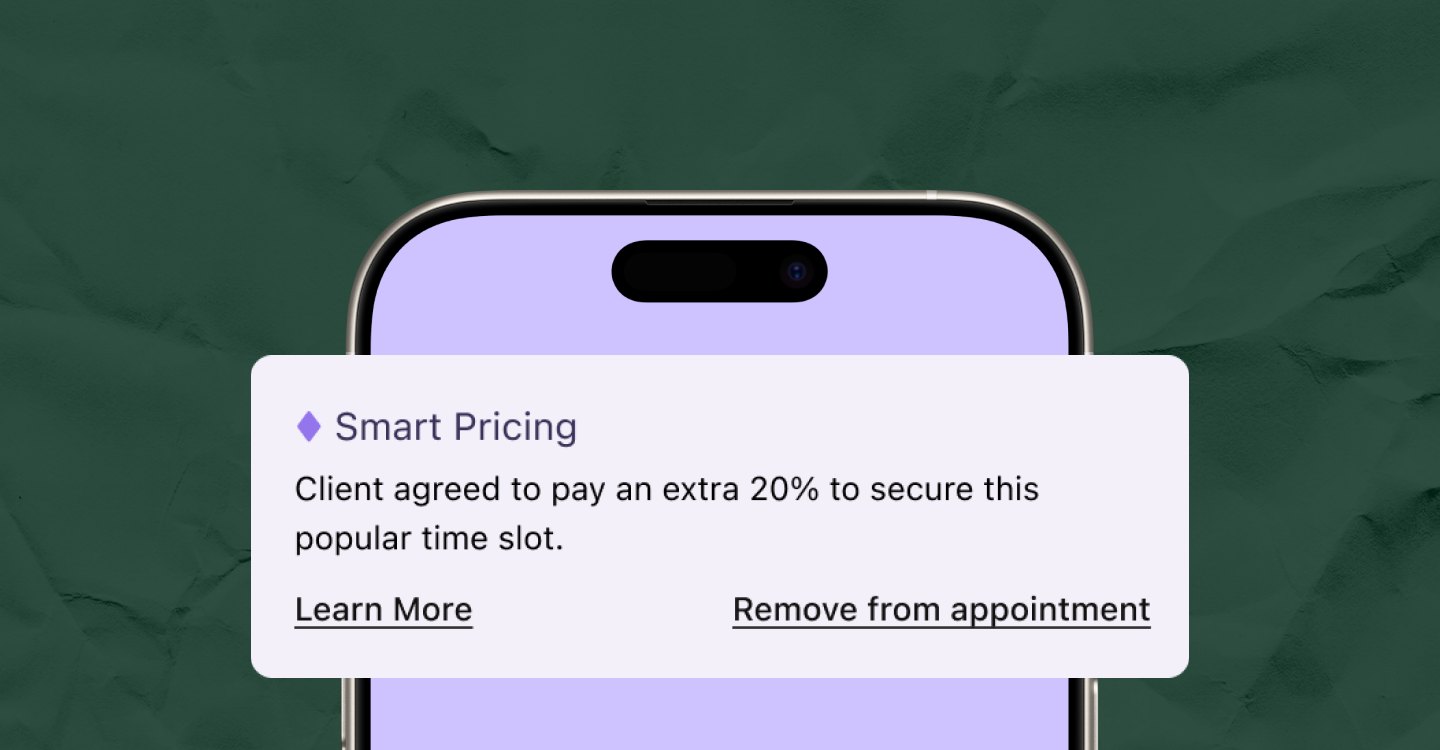
SmartPricing takes the demand-based approach above and automates it. It adjusts your rates for high-demand times without you manually rewriting your menu every week. Professionals using SmartPricing average $385 more annually, and the busiest 10% of pros clear over $1,000 in extra earnings. It’s not a new client strategy. It’s about earning more from the hours you’re already working.
FAQ
How often should I review my prices?
Most pros review pricing once or twice a year, or sooner if their book stays consistently full. A packed calendar for several weeks running is usually a signal worth acting on.
Is peak pricing the same as surge pricing?
They work on a similar principle, charging more when demand is highest. In beauty services it’s usually applied gently, to a handful of peak slots, rather than swinging widely like ride-share pricing.
Will raising prices make me lose clients?
Some pushback is normal, but most clients stay when the increase is reasonable and communicated clearly. Losing a small number of price-sensitive clients often makes room for more profitable ones.
What’s the easiest pricing strategy to start with?
Tiered pricing based on experience is usually the simplest to explain to clients. It’s also the easiest to justify with a straightforward story about your training and results.
Your skill didn’t stop growing the day you got licensed, and your prices shouldn’t act like it did. Every strategy here is just a way of letting your rates catch up to the pro you’ve actually become. Start with one change, watch how your book responds, and build from there.
Find a pro near you
Book the looks you are reading about — top-rated pros in your city.