Cost of Goods Sold for Service Businesses, Explained
Last updated October 24, 2026 · By StyleSeat Editorial Team
You just placed a supply order that made you wince: color tubes, developer, foils, gloves, all at once. Your revenue this month looked great on paper. Your bank account tells a slightly different story. Somewhere between the two numbers is a concept most service pros never learned in school: cost of goods sold.
It sounds like accounting jargon built for factories and retail shelves. For a service business, it’s simpler than it sounds, and it explains a lot about where your money actually goes.
Short version
- Cost of goods sold, or COGS, is the direct cost of materials used to deliver a service, not your rent or marketing.
- Many beauty businesses run product costs around 10–20% of service revenue, though it varies widely by specialty.
- Tracking COGS per service reveals which services are quietly less profitable than they look.
- Your time and skill matter enormously, but they don’t count as COGS. That’s a separate part of the math entirely.
What COGS actually means for a service pro
COGS covers whatever gets used up delivering the service, and nothing more. For a colorist, that’s dye, developer, and foils. For a nail tech, it’s polish, gel, and files. For a massage therapist, it’s oil, linens, and laundering costs.
Rent, booth fees, marketing, and your own labor don’t belong in COGS. Those are overhead, a different bucket entirely. Mixing the two together is the most common mistake pros make when they try to price a service from scratch.
How to calculate it
Start small. Pick one service, and total the cost of every product used for a single appointment. Divide that by the price you charge for the service. That percentage is your COGS ratio for that one offering.
| Service type | Typical COGS items | Rough COGS range |
|---|---|---|
| Hair color | Dye, developer, foils, toner | 15–25% of service price |
| Manicure/pedicure | Polish, gel, files, disposables | 8–15% of service price |
| Massage therapy | Oils, linens, laundering | 5–10% of service price |
| Lash extensions | Lashes, adhesive, primer, tape | 10–20% of service price |
Once you have a ratio per service, compare it against your price. A service with a high COGS ratio and a low price is a candidate for a rate increase. A smaller portion size or a different product line altogether can also help.
The part that isn’t a line item
Here’s what COGS never captures. Years spent learning how a formula lifts differently on damaged hair. The steady hand behind a clean lash line. That expertise doesn’t show up in a spreadsheet. It’s real, and it’s a huge part of what clients are actually paying for. Understanding your costs matters. So does remembering that your skill is worth more than any material in the equation.
Turning the numbers into more income
Once you know your true costs, pricing gets a lot less guessy. StyleSeat’s marketplace puts your business in front of more than 74 million visits a year. Over 2 million clients are actively searching for pros like you.
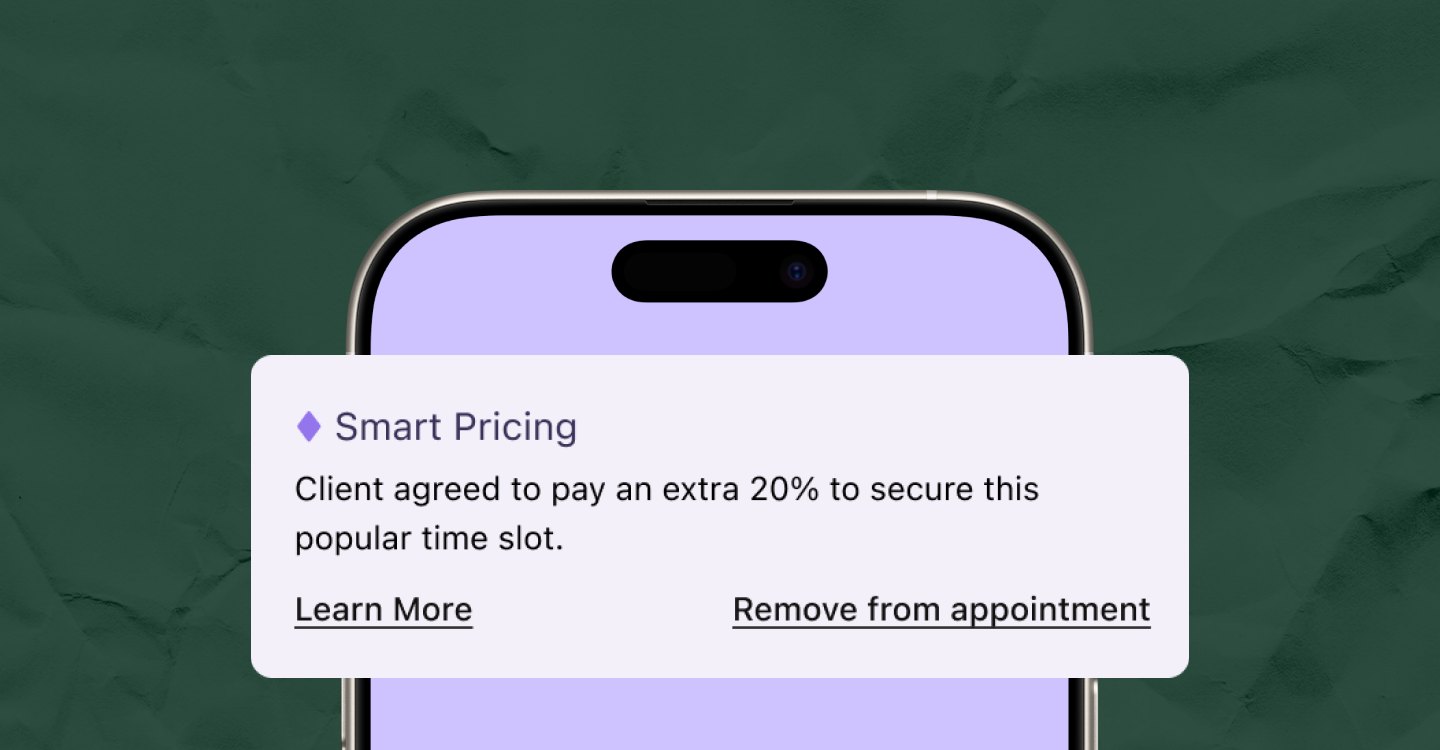
SmartPricing helps you capture more value from your busiest hours without repricing your whole menu by hand. Pros using it average $385 more annually, and the busiest 10% clear over $1,000. Paired with a clear-eyed look at your COGS, it’s one more way to keep prices honest to your real margin.
FAQ
Is labor part of cost of goods sold?
For most solo service pros, no. Labor is typically tracked separately as your own time or as staff wages, not as a material cost.
What’s a healthy COGS percentage for a salon?
It varies by service, but many beauty businesses aim to keep product costs under roughly 20% of service revenue.
Do I need accounting software to track COGS?
Not necessarily. A simple spreadsheet tracking product cost per service is enough to start, especially for a solo pro.
How does COGS affect my pricing?
Knowing your COGS per service shows which prices leave healthy margin and which ones barely cover materials, guiding smarter increases.
Numbers like COGS can feel cold next to the creative, hands-on work you do every day. But understanding them is what lets that work keep paying off. Get the math right once. You’ll spend a lot less time worrying about it and more time doing what you’re actually great at.
Find a pro near you
Book the looks you are reading about — top-rated pros in your city.