Personal Trainer Insurance: What It Costs and Why
Last updated September 1, 2026 · By StyleSeat Editorial Team
The gym emailed before your first session there. Not about the schedule, not about the key fob. About a certificate of insurance, naming them as an additional insured, before you touch a client on their floor.
And you thought: I have a certification, a client list and a squat rack. What I do not have is a policy number, and that is the thing standing between me and my clients.
Personal trainer insurance cost is one of the few numbers in this business that companies actually publish: Insure Fitness Group posts $189 a year, and Insurance Canopy posts $15 a month or $159 a year. Here’s how to think about insurance overall.
The Highlights
- Two insurers publish a price: $189 a year and $159 a year (or $15 a month). Both bundle general and professional liability.
- The limits are what you are actually buying. One posts $1M per occurrence and $3M aggregate; the other posts $2M per occurrence and $3M aggregate.
- A cheaper premium at a lower limit is not cheaper. Get three quotes at identical limits or you are not comparing apples to apples
- At $189 a year, coverage costs about two sessions. At $75 a session you take home $90, assuming a 20% tip — so 2.1 sessions pays the year.
Personal trainer insurance cost, as two insurers publish it
Here are two companies that post a number and its limits, exactly as each writes them.
| What you get | Insure Fitness Group | Insurance Canopy |
|---|---|---|
| Posted price | $189 per year | $15 per month, or $159 per year |
| General + professional liability | $1M per occurrence / $3M aggregate | $2M each occurrence / $3M aggregate |
| Personal and advertising injury | $1M | Not published |
| Products – completed operations | Not published | $3M aggregate |
| Medical expense | Not published | $5,000 |
| Damage to premises rented | Not published | $300,000 |
| Deductible | Not published | $0 |
| Extras | $25,000 a year identity theft protection | Optional add-ons for gear, cyber, nutrition advice and abuse/molestation, priced separately |
One policy is $30 a year more and carries double the per-occurrence limit. Whether that is a good trade depends on what your gyms require.
Five things that change your premium
There are several factors to think about when considering insurance:
- Your limits. $1M/$3M versus $2M/$3M is the biggest lever, and the one most people never look at.
- Where you train people. Your studio, a gym floor, a client’s living room and outdoors are four different risk pictures, and a policy written for one may not follow you to another.
- What else you sell. Nutrition guidance, group classes, online coaching and equipment sales are commonly add-ons, not base coverage. Say all of it when you get quoted.
- Add-ons. Gear, cyber, and abuse and molestation coverage are priced on top. Facilities increasingly require the last one.
- Your state and your claims history. The two you do not control.
The rule that saves the most money is to: get three quotes at identical limits. A $40 saving that comes from halving your per-occurrence limit is not a saving, it is a smaller policy.
Understand the limit your gym requires
Before you compare a single quote, email the facilities you work in: what minimum limits do you require, and do you need to be named as an additional insured. Most gyms have a standard answer and will send it in a paragraph.
That answer sets your floor. If a gym requires $1M per occurrence and $2M aggregate, a $1M/$3M policy clears it and a smaller one does not — an open-ended shopping question just became yes-or-no. Adding an additional insured is usually free, but some carriers charge per certificate, so ask.
Practice without risk of a financial catastrophy
You know the client. Fifty-eight, back from a shoulder repair, cleared by her surgeon, certain she is ready to press overhead again because she did it for thirty years.
You are the one who says not yet. You regress the movement, you find the thing she can do that still feels like progress, and you spend six weeks getting her there in a way she does not resent. That judgment — knowing when to hold someone back, and how to do it without taking the wind out of her — is the actual product. It is also what gets second-guessed if something goes wrong six months later.
Insurance is what lets you keep making those calls without a bad outcome becoming a personal financial event. Get the clearance, the history and the signature recorded before the first rep — and have your insurer or an attorney write the waiver, not a template you found.
A year of coverage costs about two sessions
The formula for any fixed cost: annual cost ÷ your take-home per session = the sessions it takes to cover it.
Say you charge $75 an hour. A returning client pays $75 and tips $15, so you take home $90, assuming a 20% tip. $189 ÷ $90 = 2.1 sessions — two sessions and change buys a year at $1M per occurrence and $3M aggregate. Monthly that is $15.75, less than one session, every month.
How this works on StyleSeat
StyleSeat does not sell insurance. It takes the two jobs around it off your plate: getting the paperwork signed before the session, and filling the sessions in the first place.
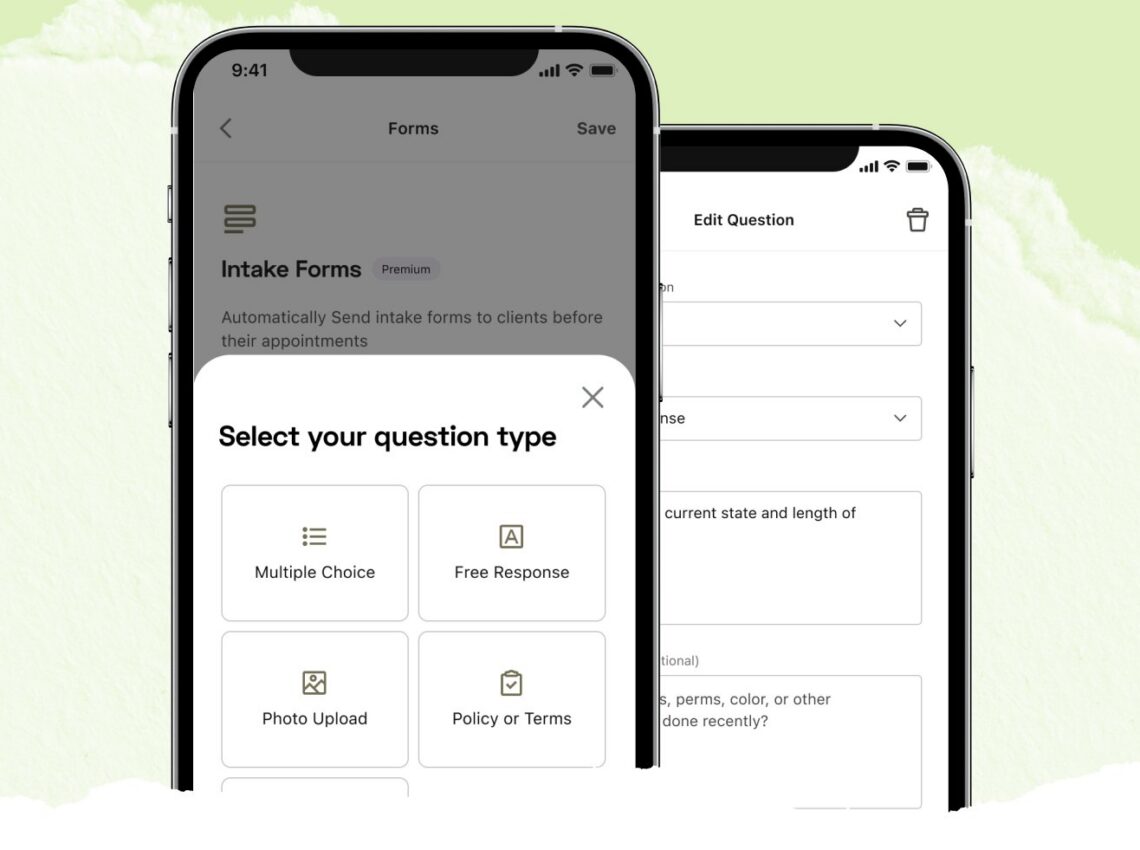
Custom Forms support five question types, including a signature and a photo upload, so intake, health history and waiver are signed before she walks in rather than on a clipboard while the hour runs. Your client record holds notes, photos and history in one place, so the surgeon’s clearance is where you will look for it in eight months. Here is how the pieces fit together.
Then demand. StyleSeat is $35 a month and spends millions a year in ads pointed at pros, drawing 74M+ visits a year. Email and text marketing, client reminders, the automated booking assistant, business analytics, promotions, the Loyalty Program, the AI Social Post Builder and review management are all in the base price. New Client Connection costs 30% of a new client’s first appointment service cost, capped at $50, once per client and never again, charged after the session — on a $75 first session the fee is $22.50 and you take home $67.50, assuming a 20% tip, since the fee is calculated on the service and never on the tip. You have 24 hours to accept or decline, less if the session is sooner, and you can turn it off whenever you want. The full cost breakdown is here.
Where StyleSeat is not the answer: if you run a staffed facility with payroll, commission splits, real inventory or several locations, Mangomint and Boulevard are built for that, and they are good at it.
Questions pros ask
How much does personal trainer insurance cost?
Two insurers publish a price: Insure Fitness Group posts $189 a year for $1M per occurrence and $3M aggregate, and Insurance Canopy posts $15 a month or $159 a year for $2M each occurrence and $3M aggregate. Everything else is a quote, and the spread between quotes is mostly the limits.
Do I need my own policy if I train inside a gym?
Almost always yes — most facilities require independent trainers to carry their own policy and to name the gym as an additional insured. Email the gym for its minimum limits before you shop, because that number decides which policy you need.
What is the difference between general and professional liability?
General liability covers bodily injury and property damage — a client trips over a kettlebell. Professional liability covers claims about your advice and instruction — the program you wrote made an injury worse. Both posted policies bundle the two, which is why each aggregate reads $3M.
Does my policy cover nutrition or online coaching?
Not automatically. Nutrition guidance, online coaching, group classes and equipment sales are commonly priced as add-ons rather than included in a base policy — Insurance Canopy lists diet and nutrition among its optional add-ons. List everything you actually sell when you get quoted, so nothing sits outside the policy.
Two sessions. That is what standing behind your own judgment costs for a year — and once it is bought, the only question left is how many people are on your calendar. StyleSeat is $35 a month, $19 while the promotion is running, and the first 21 days cost nothing — the pricing page has the rest.
Find a pro near you
Book the looks you are reading about — top-rated pros in your city.