Marketplace Commission vs. Paid Ads: What One New Client Really Costs on Every Platform
You ran the ad. Fifty dollars into a boosted Instagram post, timed for a Friday afternoon when your calendar had three open slots. It got some likes. It got a few comments from people who follow you but never book. Monday, your calendar still had three open slots.
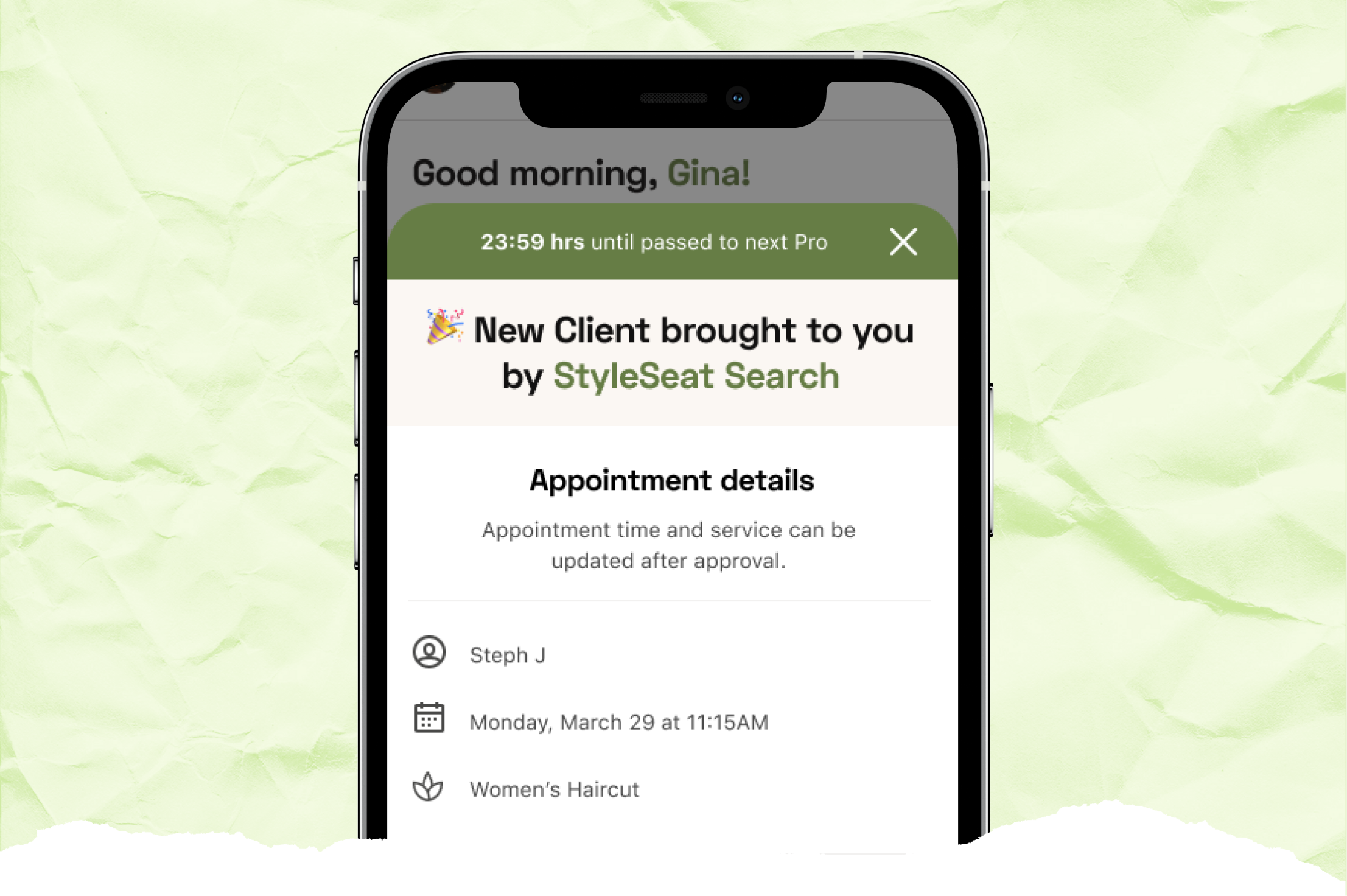
Same week, a stranger found you through StyleSeat’s marketplace, booked a $90 color service, and paid at checkout. StyleSeat took $27 for making that introduction. You never bought an ad for her, and she showed up anyway.
The fifty you spent got you nothing. The twenty-seven you paid got you a client. Both numbers answer the same question: what does one new client actually cost you?
Short version
- A commission is a cost you only pay when a client shows up. An ad is a cost you pay whether she does or not.
- StyleSeat’s New Client Connection fee is 30%, capped at $50, once per client, ever.
- Booksy’s Boost charges the same 30% — but its ceiling is $100, twice StyleSeat’s.
- Google Ads for beauty and personal care runs a median $39.25 per lead. That’s just a lead, not a booking.
A commission isn’t a tax — it’s what a client cost you
Every business pays to find a client. Restaurants pay for local search ads. Salons pay for a website, a receptionist, or a sign out front. The industry has a name for that spend: customer acquisition cost, or CAC. It’s what it costs, in dollars, to turn a stranger into a paying client.
A subscription-only scheduler doesn’t remove that cost. It moves the cost off the platform and onto you instead. An ad, a flyer, a referral discount, or your own time posting between clients.
A marketplace commission is the same CAC, collected differently. It only shows up when it actually produces a client, and only once.
What one new client costs, platform by platform
Here’s the new-client delivery fee, side by side. See it on a $100 service, and on a $600 one — where a cap actually starts to matter.
| Platform | Rate | Floor | Ceiling | Fee on a $100 service | Fee on a $600 service |
|---|---|---|---|---|---|
| StyleSeat New Client Connection | 30% | none | $50 | $30 | $50 (capped) |
| Booksy Boost | 30% | $10 | $100 | $30 | $100 (capped) |
| Fresha marketplace fee | 20% | $6 | subscribe to learn what their cap is | $20 | $120 at the plain 20% rate* |
| Vagaro marketplace listing | — | — | — | $0 | $0 |
| Square Go | — | — | — | $0 | $0 |
Vagaro and Square Go both run a free marketplace listing. It’s real, not a workaround. But neither company publishes how many clients that listing actually sends. Free isn’t the same as working — it’s the one number neither one will show you.
What paid ads actually cost, before anyone books
Ads charge you whether a client ever appears. WordStream’s 2026 benchmark study looked at more than 13,000 active Google Ads campaigns. It puts the median cost per lead in beauty and personal care at $39.25.
A lead isn’t a client. It’s a click, a call, a form. Getting from that lead to an actual appointment costs more: more clicks, more follow-up, more of your own time.
There’s no honest national average for that last step. It depends on your ad, your city, and your booking page. Use this formula instead. Take what you spent on ads last month, divide it by the new clients who actually showed up. That’s your real number.
Compare that number, whatever it is, against the capped percentages above. For most pros it lands higher — and it doesn’t stop once the client stops being new. Ads renew every month whether or not they work.
You didn’t get into this to run an ad account
You went to school for hair, skin, nails, or bodywork — not media buying. Every hour spent boosting a post, checking reach, or guessing which caption worked is time away from the chair.
A commission that only charges you when a client actually books hands that hour back. You’re not managing a campaign. You’re doing the thing you’re actually good at, and the client finds you anyway.
How the math works out on StyleSeat
Professionals using New Client Connection average $1,904 in first-year service revenue. Against that, they pay about $370 in fees. That’s not $370 lost — it’s $370 spent to bring in nearly two thousand dollars they wouldn’t have had.
The other pillar is what’s already included at $35 a month: the marketing suite, and SmartPricing. SmartPricing raises prices on your busiest slots, instead of charging you to fill empty ones. Professionals using it average $385 a year, and the busiest tenth clear over $1,000.
If your book is already full, a client-finding fee isn’t buying you much. A flat-rate scheduler is the honest answer for that season. This math is for the pro with an open chair, still looking for who fills it.
FAQ
Is a marketplace commission really cheaper than running my own ads?
For most pros, yes. A commission like StyleSeat’s 30%, capped at $50, only charges you when a client actually books. Ads cost money whether anyone shows up or not. Compare your own numbers. Divide last month’s ad spend by the new clients who booked, then put that beside the capped percentage.
What’s the actual cap on StyleSeat’s New Client Connection fee?
30% of the first appointment’s service cost, capped at $50. It’s charged once per client, and never again after that first visit.
Does Booksy or Fresha charge less than StyleSeat for a new client?
Booksy’s Boost charges the same 30%, but its ceiling is $100 — twice StyleSeat’s $50. Fresha charges 20%, but doesn’t publish where its own cap kicks in.
Do Vagaro and Square Go really charge nothing for new clients?
Their marketplace listings are free to use, but neither company publishes how many clients a listing actually sends. Free isn’t proof it’s working. It’s the one figure neither company shares.
What does paid advertising actually cost for a beauty business?
WordStream’s 2026 benchmark puts the median Google Ads cost per lead in beauty and personal care at $39.25. That’s before anyone books, so the real cost of one client typically runs higher.
You were never going to stop paying to find clients — every business does. The only real choice is who gets paid, and when. A fee that only shows up after someone books is the version that’s actually on your side.
Find a pro near you
Book the looks you are reading about — top-rated pros in your city.