Client Red Flags in Beauty — and How to Protect Your Chair
By StyleSeat Editorial Team
She messaged you off Instagram, not through your booking link. “Do you take cash? And can you do like 8pm, I get off late.” No mention of the deposit. Three questions about price, none about your work. Something in your gut went quiet, and you booked her anyway because it was a Tuesday and the slot was open.
She showed up 40 minutes late, wanted the volume set at the classic price, and left a review that had nothing to do with the lashes.
You knew. You knew at “do you take cash.” The red flags were all there in the first message — you didn’t have a system that lets you act on them without feeling rude. Let’s build one, because protecting your chair isn’t about being suspicious of everyone. It’s about noticing the pattern early and letting your policies do the deciding.
The short version
- Most problem clients wave the flag in the first message. The tell is usually an attempt to book around your system, not through it.
- One bad booking in a premium slot isn’t a small loss. A no-showed $150 full set, tip included, is $180 off your Saturday.
- Requiring booking through your app — with a card on file and your policy agreed up front — screens out most of it before it reaches your chair.
- The clients who balk at booking through your app were usually the ones who’d have cost you the most — the ones who book without blinking are your regulars in the making.
The red flags, and what each one is really telling you
None of these mean a person is bad. They mean a booking is likely to cost you, and that’s a business signal you’re allowed to read. The common thread: the client is trying to route around the structure that protects you.
| The flag | What it usually predicts | The fence |
|---|---|---|
| Wants to book off DMs, not your link | No policy agreed, no card on file, no record | Send the booking link every time; the appointment starts there |
| “Do you take cash?” before anything else | Avoiding a card on file and your deposit | Keep booking and deposit through the app |
| Haggles the price before booking | Will haggle again at the chair, and after | Prices are set in your booking flow, not negotiated in DMs |
| Vague on timing, pushes for after-hours | Boundary testing before you’ve even met | Your bookable hours are your bookable hours |
| Cancelled or no-showed a past appointment | The best predictor of the next no-show | Require a deposit and a card on file to rebook |
| Won’t confirm, goes quiet after booking | Higher no-show risk | Automated reminders and a card on file |
You don’t have to interrogate anyone. You only have to hold your system steady. A client who’s going to be a problem often disqualifies herself the moment you say “here’s my booking link and my policy” — because the whole plan was to avoid exactly that.
Why one bad booking hurts more than it looks
The reason a red flag matters isn’t the drama. It’s the slot. A problem client in a two-hour lash appointment doesn’t cost you a service — she costs you a Saturday afternoon you can’t get back.
Run it: a $150 full set with a 20% tip is $180 landing in your account. If she no-shows, that’s $180 gone and a two-hour block a reliable client would have filled. Two of those a month is $360 off the top, from bookings your gut flagged before they ever happened. Screening isn’t paranoia. It’s the difference between a full Saturday and a Saturday with a crater in it.
Make StyleSeat the front door — and let it screen
Here’s the shift that ends most of this: stop taking bookings in five places. When every appointment starts at your booking link, the screening happens automatically, without you having to judge anyone.
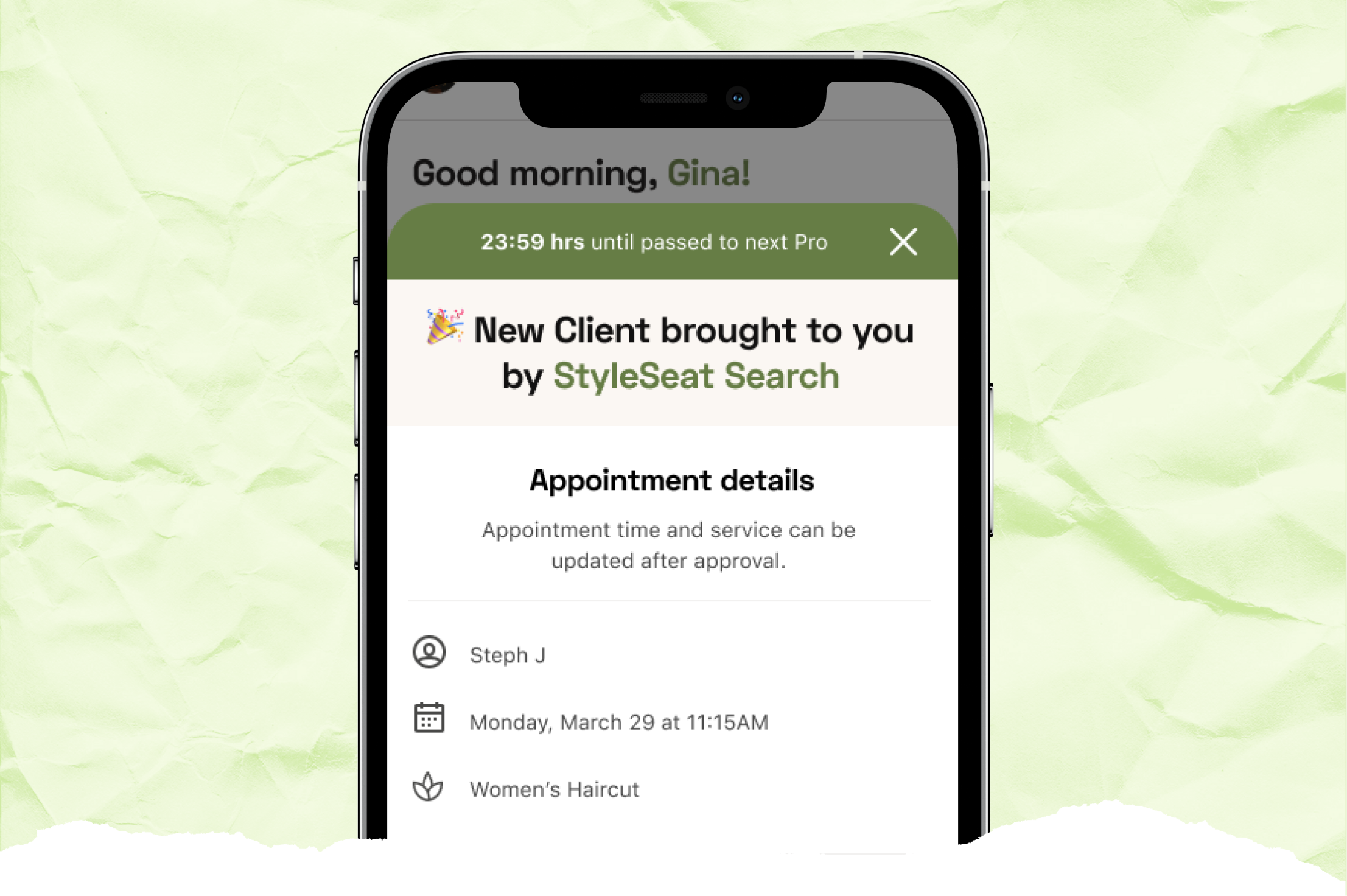
Through StyleSeat, the client agrees to your cancellation policy before the appointment exists. You can require a card on file, so a no-show is covered by your terms instead of an awkward chase. The booking, the reminders, and the whole message thread live in one place — and you never hand out your personal number to someone you’ve known for four minutes. The clients who balk at that were usually the ones who’d have cost you the most; the ones who book without blinking are your Saturday regulars in the making. Your booking system does the vetting, so you don’t have to trust your read under pressure on a busy Tuesday.
Let the booking flow do the screening for you
The first bad feeling is data — but you don’t have to keep a mental list or act on it alone. Make the app your front door and the screening happens on its own: the client who was going to be a problem is the one who won’t book through your link, agree to your policy, or keep a card on file. The one who does all three without blinking is your next regular.
So the next time a first message trips your gut, you don’t argue and you don’t accuse. You send the booking link and your policy, and let the response sort it. The clients who try to route around your system disqualify themselves; the ones who book on your terms are exactly the ones you wanted. Your booking flow does the vetting, so a bad afternoon doesn’t get to repeat itself.
The part that protects your craft, not just your calendar
Here’s what all this vetting is really for, and it isn’t money. Your best work needs presence. A lash set is two hours of steady hands, close focus, and calm — and you cannot give that to a client while a corner of your mind is bracing for a person to be difficult. Screen the chaos out at the door, and the client in front of you gets all of you: the careful mapping, the fill that lasts, the finish you’re proud to post.
Protecting your time is how you protect the quality of your art. A chair full of clients who respect your system is a chair where you get to be an artist instead of a bouncer — that’s the whole point of the fences. Not to keep people out, but to keep your focus in.
Where StyleSeat fits
You can screen by hand — a saved reply with your booking link, a mental list of who to watch. StyleSeat puts the screening into the booking itself. Clients book through your link, agree to your cancellation policy, and can be required to keep a card on file, so the vetting happens before anyone reaches your chair. In-app messaging keeps every conversation in one thread without your personal number. And automated reminders — included in the subscription — quietly lower the no-show risk on the bookings you do take.
Red flags don’t become confrontations. They become terms, and a book that protects itself.
FAQ
What’s the biggest red flag that a client will be a problem?
Trying to book around your system — off DMs instead of your link, “do you take cash” before anything else, pushing to skip the deposit. It usually means they want to avoid the policy and the card on file that protect you. Hold your system steady and most of these sort themselves out before the appointment exists.
How much does one problem booking actually cost me?
More than the service, because it eats a premium slot. A no-showed $150 full set is $180 with the 20% tip included, plus the two-hour block a reliable client would have filled. Two a month is about $360 off the top — from bookings you often sensed were risky in the first message.
How do I make sure a problem client doesn’t slip through twice?
Route every booking through StyleSeat. When a client has to agree to your cancellation policy and keep a card on file to book, the ones who were going to be a problem tend to opt themselves out — and the ones who book anyway are covered by your terms. You don’t have to police a list; the booking flow does it for you.
Should I require a card on file for new clients?
For the ones showing red flags, yes. A card on file and an agreed cancellation policy mean a no-show is handled by your terms instead of an awkward chase, and the requirement itself screens out the clients who were planning to skip both.
The chair you’re actually protecting
A protected chair isn’t one that turns people away. It’s one where every booking comes through the same front door, a bad feeling becomes a fence instead of a repeat, and the clients in your book are the ones who respect what you do. You built a craft worth protecting. Let your system stand at the door so you don’t have to — and so the person in your chair gets the artist, not the bouncer.
StyleSeat is a monthly subscription, with a 21-day free trial to set up your policies before you pay a cent. Start with StyleSeat and give your chair a front door.
Find a pro near you
Book the looks you are reading about — top-rated pros in your city.