Signing a Salon Suite Lease Agreement: What to Check

Last updated October 24, 2026 · By StyleSeat Editorial Team
The lease arrived as a PDF at 11:17 on a Tuesday night.
Eleven pages. You got to page six before the word restoration stopped you cold.
Nobody taught you to read one of these. So here is the order to read it in.
A salon suite lease agreement is a short list of clauses that decide what the rent really costs. There are twelve of them, and each one has a fair version.
The Highlights
- Twelve clauses decide your real cost. The rent figure is only the first of them.
- Ask for 30 to 60 days of notice on both sides, written into the term clause.
- Photograph the room on day one. Those photos are what settle the restoration clause later.
- Your tools stay yours. StyleSeat is $35 a month, with a promotion running at $19, billed to you.
The twelve clauses in a salon suite lease agreement
Read with a pen. Mark anything you cannot explain back in one sentence, then ask about it before you sign.
| Clause | What to look for | What a fair version looks like |
|---|---|---|
| Term and auto-renewal | How long you are committed, and what renews it | Twelve months, renewing only when both sides sign again |
| Rent escalator | Whether rent rises, when, and by how much | One increase a year, at a stated dollar or percentage figure |
| What all-inclusive covers | The word is marketing until the lease lists the items | Wifi, water, laundry, towels and reception each named |
| Utilities and shared costs | Who pays power, water and the common areas | A flat monthly add-on, or a split written as a number |
| Keys and access hours | When you are allowed to be in the building | 24-hour access, or hours stated identically in the lease and the handbook |
| Deposit | How much is held, and what gets it back | One month’s rent, refundable, with the conditions listed |
| Client list and booking data | Who owns the names, the notes and the calendar | Yours, said plainly, and yours to take when you go |
| Exclusivity | Whether they can rent the next room to your competitor | A stated limit on identical services on your floor |
| Non-compete | Where you may work after you leave | No restriction on where you work next |
| Improvements | What you may install, and who owns it afterwards | Written approval, and your shelving stays yours or is bought |
| Restoration | What you must undo at the end of the term | The room as you found it, with normal wear excluded |
| Exit and sublet | How you leave early, and whether you may sublet | A notice period, a named buy-out figure, sublet by approval |
The three that cost people the most
Most of those twelve are housekeeping. Three of them decide whether leaving is cheap or expensive.
The client list. Plenty of suite leases say nothing at all about it, and the silence is the risk.
Ask for one sentence confirming your client records are yours. You are the person who built that list, and a clientele takes years to build.
Restoration. This is where deposits quietly die, usually over a wall colour or a shelf.
Photograph every wall, the floor, the sink and the ceiling on the day you get keys. Email the photos to your landlord and keep the reply.
Exit and sublet. Life moves faster than a thirty-six month term does.
Ask what leaving early costs, as an actual number, before you sign. A fair lease answers that question in writing.
What to settle before the keys change hands
Three more things belong in writing, and none of them is awkward to ask for.
- The insurance you must carry. Get the amount and whether the landlord is named on your policy.
- The house rules. Ask for the tenant handbook, because it often binds you like the lease does.
- Your own policies. Your cancellation window is yours to set, not the building’s.
Insurance and waivers are separate questions that sit beside each other. It is worth knowing whether your services need a waiver before your first booking.
Then put your own rules where clients can see them. Displaying your policies properly saves more arguments than any clause will.
The room you are actually signing for
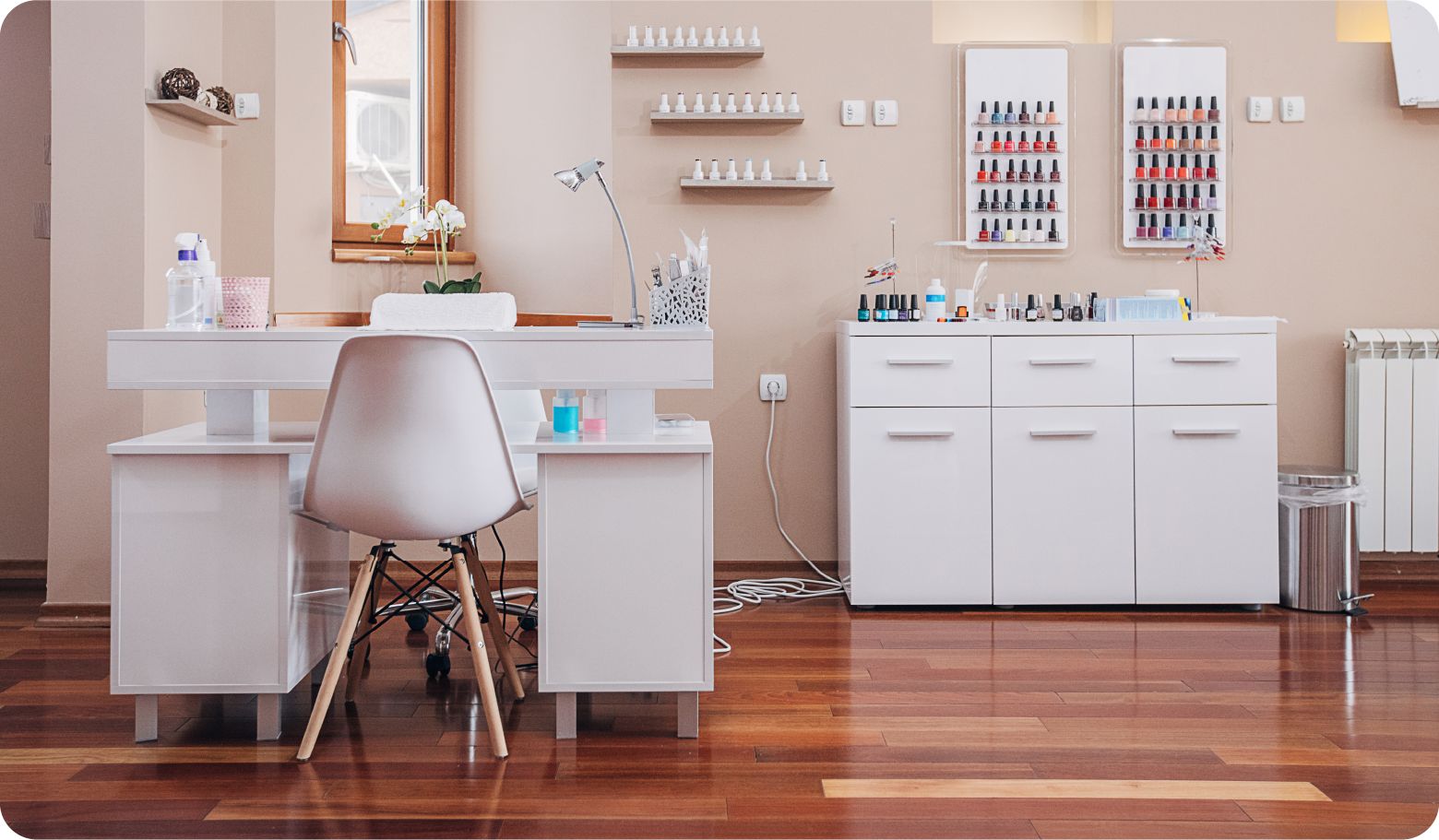
Underneath all twelve clauses is a small room you have already decorated in your head.
The lamp angled the way you like it. Your own product on the shelf instead of somebody else’s. A 7pm client who comes straight from her shift and needs the quiet.
Read the lease carefully precisely because the room matters that much. The paperwork is how you protect the good part.
Where your side of the client-list clause lives
Your booking page, your prices and your client notes sit in your account, not in the building.
That is the practical answer to clause seven. Your account holds that work, and the suite you rent does not.
New clients work differently, and the shape is worth knowing before you budget. StyleSeat spends millions a year in ads to find your next client.
The bill arrives only after one of them books, and only once for that client. It is 30% of her first visit, capped at $50, charged after the service. No new client, no fee.
Then she is yours. Every rebooking after the first carries no fee.
Take a $120 service. The one-time $36 comes off, her $24 tip stays whole, and $108 is yours, assuming a 20% tip. Let’s say your clients book 2.5 times throughout the year. One new client is worth $300 in service revenue, against that single fee, netting $264.
It adds to the marketing you already run rather than replacing it. Referrals, your own social posts and the sign on your door keep working. And the step-by-step on opening your own space covers the build-out side.
Two professionals sign these leases. One is still filling her week, and the marketplace is written for her.
The professional signing with a full book has a different worry. She wants the same hours in that room to pay her more. Professionals who use SmartPricing average $385 a year in extra service revenue, and the busiest tenth clear over $1,000. StyleSeat charges about 5.5% of a smart-priced appointment, capped at $16.50.
Questions professionals ask
What should I check in a salon suite lease?
Twelve clauses, in this order. Term and auto-renewal, the rent escalator, what all-inclusive covers, utilities, access hours and the deposit. Then your client list, exclusivity, non-compete, improvements, restoration, and exit and sublet. The four that cost people most are the client list, restoration, exit and the escalator.
Who owns my client list if I rent a suite?
The lease decides, and many suite leases say nothing about it at all. Ask for one sentence confirming the records are yours, and that you may take them when you leave. Silence in a lease is not the same as permission.
What does all-inclusive really include?
Nothing, until the lease lists it item by item. Ask for wifi, water, laundry, towels, reception and the common areas to be named. If a utility is split rather than included, get the split written as a number.
What is a restoration clause?
It is the paragraph that says what you must undo before you hand the keys back. Normal wear should be excluded in writing. Photograph every surface on your first day and email the pictures to your landlord. Those photos settle the argument later.
What does the booking side cost on top of rent?
StyleSeat is $35 a month, with a promotion running at $19, after a 21-day free trial. Promotional pricing moves, so confirm the rate before you budget. Card-present processing runs 2.5% + $0.30, and 1.9% + $0.30 for the first six months.
A lease is only frightening while it is unread. Twelve clauses, one pen, one evening.
Mark what you do not understand, ask for it in writing, and sign the version you can explain out loud.
Budget $35 a month for StyleSeat, with a promotion running at $19 today. Nothing is charged for the first 21 days. Have your booking page ready before the keys change hands.
StyleSeat is not affiliated with any salon suite brand, landlord or franchise named here. This post is general information, not legal advice. Have a lawyer read your lease before you sign it.
Find a pro near you
Book the looks you are reading about — top-rated pros in your city.