Massage Cancellation Policy: A Practical Guide
Last updated October 24, 2026 · By StyleSeat Editorial Team
Your 2pm client never showed. The table is warmed, the towels are stacked, and the room smells like eucalyptus for no one.
You waited past the top of the hour before texting her. No reply came. That hour is gone, and so is the income it should have brought.
Short version
- A clear cancellation policy sets a notice window, usually 24 to 48 hours, before a cancellation is free.
- Clients need to see the policy before they book, not after they cancel.
- A late-cancellation or no-show fee typically runs 50% to 100% of the service price.
- Automatic card-on-file charges collect the fee without an awkward phone call.
Why “no policy” isn’t neutral
A missing policy doesn’t protect clients. It just moves the cost onto you. Every open hour on your table is inventory you can’t sell twice. Once the slot passes, it’s gone. A therapist who eats that cost every week is running a hobby, not a business.
Clients rarely resent a fair policy. They resent finding out about one after the fact. Confusion damages trust, not the fee itself. State it once, clearly, and most people respect it.
Building the actual policy
Start with the notice window. Most massage therapists land somewhere between 24 and 48 hours. Shorter windows work if you have a wait list to fill short-notice gaps. Longer windows make sense for a specialty session that’s hard to rebook fast.
Next, decide the fee. A flat dollar amount is simple to explain. A percentage of the service price scales fairly across a 60-min massage and a 90-min deep tissue combo.
| Approach | Notice window | Typical fee | Best for |
|---|---|---|---|
| No formal policy | None | $0 | Rarely a good idea |
| Standard window | 24 hours | 50% of service | Most solo practices |
| Extended window | 48 hours | 100% of service | High-demand or specialty bookings |
Whatever you pick, write it in plain words. Try: “Cancel or reschedule at least 24 hours ahead to avoid a 50% charge.” That sentence alone prevents most disputes.
Talking about it without sounding stiff
A policy doesn’t need to sound like a legal notice. Say it the way you’d say it out loud. Try: “I hold this time just for you. I ask for 24 hours if plans change.” Clients read tone as much as content.
New clients especially need to see this before they book, not buried in a confirmation email. The moment they book is the moment they’re paying attention.
Where StyleSeat fits in
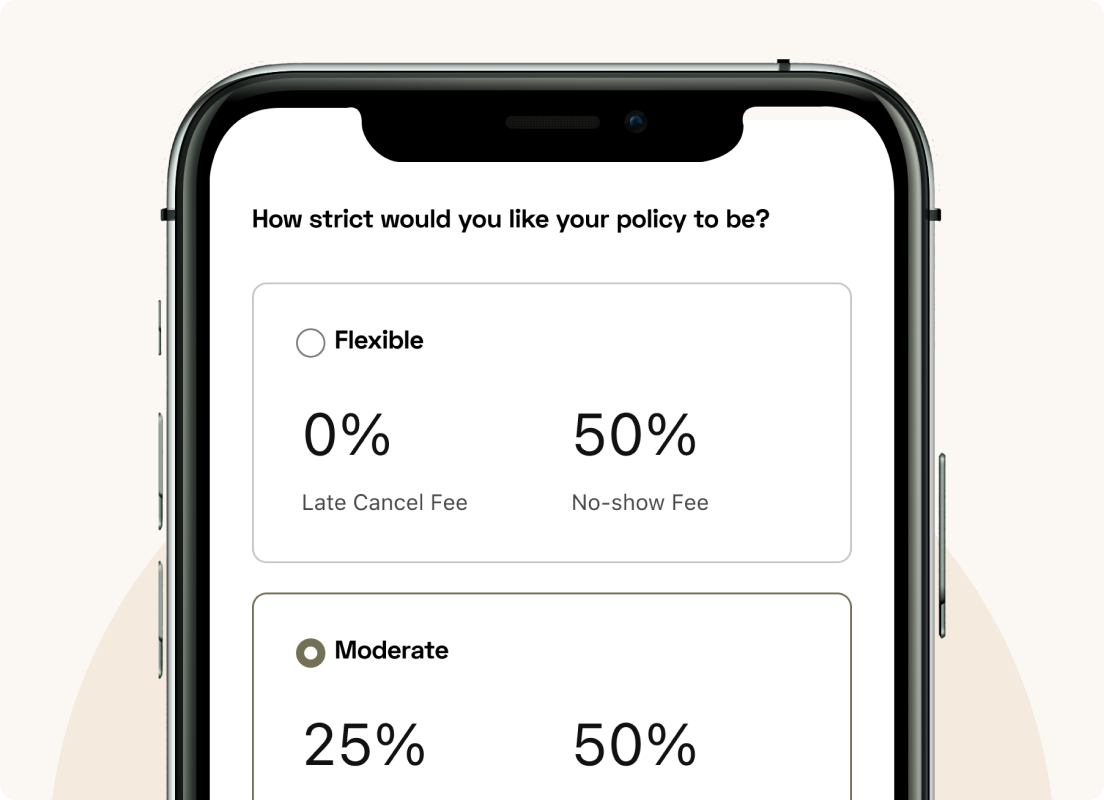
On StyleSeat, pros set their own cancellation policy on their booking page. Every client sees it and accepts it before the appointment is confirmed. When a client cancels late or doesn’t show, the fee can be charged automatically to the card on file. No phone call required. That single feature turns a policy from a suggestion into something that actually holds.
The subscription that includes this runs $35 a month, now $19 during StyleSeat’s running promotion. It also bundles client reminders that cut down on forgotten appointments in the first place. StyleSeat’s marketplace draws more than 74 million visits a year. Over 2 million clients are actively searching for a new pro there. The same policy that protects your time also greets every new client who finds you through it.
A cancellation policy isn’t about punishing clients. It’s about respecting a slot they agreed to hold. Write it once, state it clearly, and let the system enforce it so you don’t have to.
FAQ
How much notice should a massage cancellation policy require?
Most massage therapists ask for 24 to 48 hours. Pick the window that matches how far ahead you usually book.
What’s a fair no-show fee for a massage appointment?
Many pros charge 50% of the service price for a late cancellation and 100% for a no-show. Adjust based on your session length and how hard your slots are to refill.
Do I need a client’s card on file to enforce a cancellation policy?
It helps a great deal. Without a card on file, collecting a fee usually means an invoice or an awkward conversation after the fact.
Should new clients see the cancellation policy before they book?
Yes. Showing it at booking, not after a missed appointment, is what prevents most disputes.
Find a pro near you
Book the looks you are reading about — top-rated pros in your city.