How Much Do Makeup Artists Make? The Real Take-Home
Last updated October 24, 2026 · By StyleSeat Editorial Team
Twenty-two miles on the map. Fifty minutes on the freeway, with the kit belted into the passenger seat like a person.
You quoted the job at $150 and you meant it. That was before the parking garage, and before the client ran forty minutes late.
Home at ten. Brushes still to wash.
How much do makeup artists make? Take what the booking pays, then divide it by every hour the booking actually took. The drive counts. So does the kit you cleaned at midnight.
Short version
- One federal wage figure exists, and it is narrow. BLS counts 4,130 theatrical and performance makeup artists nationally.
- That sample is film and stage, not bridal, and it leaves out every self-employed artist in the country.
- Divide by real hours. A $450 morning that eats 7 hours is worth about $64 an hour before costs.
- Unbilled time is roughly a third of the job. 3 hours of driving, prep and email on a 4-hour booking is normal.
The one federal figure, and who it describes
The US Bureau of Labor Statistics does track makeup artists. It tracks a particular kind.
The occupation is called makeup artists, theatrical and performance, and its definition is applying makeup to performers. In May 2023 it counted 4,130 jobs across the whole country.
Those jobs paid a median of $47,390 a year, with a mean of $68,590. Film and television pull that mean upward, at a $119,940 industry average.
Two caveats matter more than the figures do. The sample is weighted toward stage and screen, so it is not a bridal or freelance beauty number.
And BLS wage data covers employees only. Every self-employed artist, which is most of this trade, sits outside it. So your own arithmetic is the better guide.
How much do makeup artists make per booking
Take one Saturday. A bride at $150 and four of her party at $75 each comes to $450.
| The line | How you work it out | This Saturday |
|---|---|---|
| What the booking pays | Your rates, times faces | $450 |
| Hours on site | First face to last | 4.0 |
| Hours you never billed | Drive, parking, kit prep, sanitising, emails | 3.0 |
| Hours the job really took | On site plus unbilled | 7.0 |
| Costs that leave with the job | Product used, parking; add mileage at your own rate | $53 |
| Tip at 20% | Customary on bridal work | $90 |
| What the morning paid you | $450 − $53 + $90 | $487 |
| What that is an hour | $487 ÷ 7 hours | About $70 |
Now run the same morning with a 90-minute drive each way. The hours climb to 8.5 and the rate drops near $57.
That is the whole argument for a travel minimum. Build your prices from the costs, the way a service price gets calculated from what it costs you.
Where the unbilled time hides
Four places, every time. The drive. The parking and the lift. The depotting, sanitising and repacking. The emails that settle a date nine months out.
None of that appears on an invoice, and all of it is work. Most artists price the chair time and donate the rest.
You have three ways to fix it, and they all work. Set a travel fee by distance. Set an early-call fee before 7am. Or raise the per-face rate until the whole day pays.
Pick one and apply it to everybody, including the friend of a friend. A rate you bend is a rate you do not have.
The four minutes she stops talking
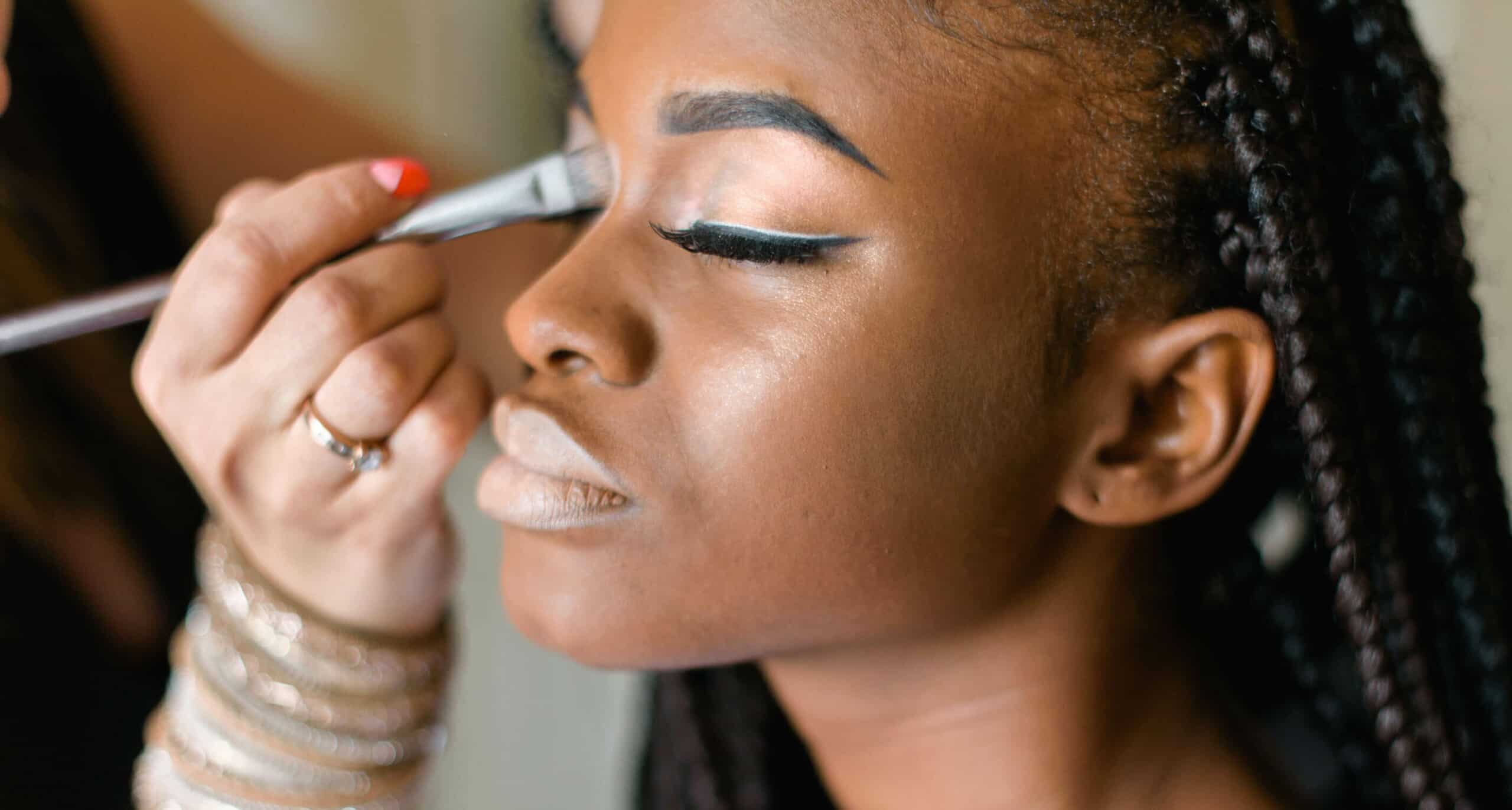
There is a point in every chair where the client goes quiet. Eyes closed, shoulders down, somebody else holding the morning for a while.
It usually lands around the second eye. You can feel it happen through the brush.
Then she opens her eyes and does the thing she does in the mirror. A half inch of chin to the left. She decides she looks like herself.
Nine years of hands, hundreds of faces, one flat brush you still use because a teacher gave it to you. That is the part that is not a rate.
What a booking looks like on StyleSeat
Your rates, your travel fee and your call-time options live on your own booking page. A party books itself while you are in the car.
StyleSeat is $35 a month, with a promotion running at $19. Two different artists pay for that month.
The first wants a fuller spring. StyleSeat spends millions a year in ads to find her next client, and carries that cost up front.
She pays only on results. No new client, no fee. When one books, the fee is 30% of that first appointment, capped at $50, charged after the service.
On a $150 trial that is $45, so she takes home $135, assuming a 20% tip. The wedding, the touch-ups and every booking after carry no fee at all.
It sits alongside your referrals and your Instagram rather than replacing either. Building a freelance makeup clientele is still your own work, and this adds to it.
The second artist is booked through October already. SmartPricing is her lever instead. Professionals who use it average $385 a year in extra service revenue, and the busiest tenth clear over $1,000. StyleSeat charges about 5.5% of a smart-priced appointment, capped at $16.50.
Questions professionals ask
Is there a national salary for a freelance makeup artist?
Not for freelance bridal and beauty work. The only federal line is makeup artists, theatrical and performance. That is 4,130 jobs and a $47,390 median in May 2023, weighted toward film and stage. Those are employee wages, and BLS does not publish wages for self-employed artists.
How do I work out my real hourly rate?
Add the hours on site to the hours you never billed, then divide the booking into that total. A $450 morning across 7 real hours is about $64 an hour before costs. Do it on three recent jobs, not one, and the pattern shows up fast.
What should I charge for travel?
Charge from your own door, not from the city limit. A tiered travel fee by distance is easiest to quote and hardest to argue with. Add parking and tolls at cost, and keep mileage at whatever rate you use for your taxes.
Do makeup clients tip?
Tipping is customary in bridal and event work, and 20% is the common figure. On a $450 morning that is $90, and it is yours in full. Say nothing about it on the day; let the booking confirmation carry the information instead.
What does StyleSeat charge when it sends me a bride?
No new client, no fee. When the marketplace brings one, you pay 30% of that first appointment, capped at $50 and charged after the service. On a $150 trial that is $45, leaving $135 with a 20% tip. Everything the same client books afterwards carries no fee.
Pick your three most recent jobs and put the real hours beside each one. You are not looking for a bad number. You are looking for the one job where the drive quietly ate the morning. That job is where your next rate comes from. Before the season turns, re-read the prep that keeps a wedding morning on time. Then run the math on what a new client is worth. StyleSeat is $35 a month, with a promotion at $19. The first 21 days are free, so you can see every rate and fee before your season opens.
Find a pro near you
Book the looks you are reading about — top-rated pros in your city.